

1. Configure Cloudflare
- Log into Cloudflare. The Cloudflare dashboard appears.
- Click the account where your bucket is located. The Account home page appears.
-
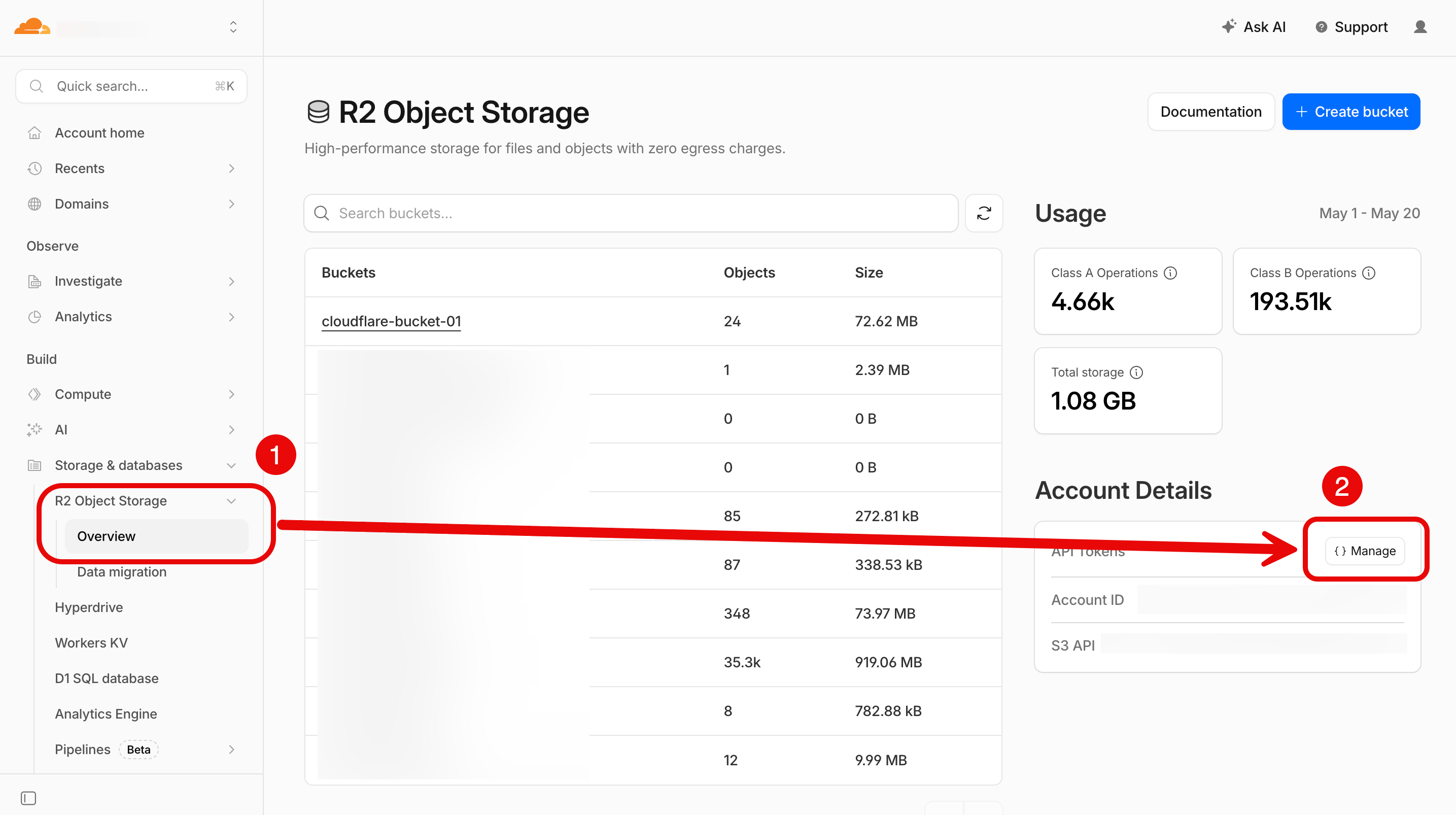
Click R2 object storage from the left hand navigation.
The Overview R2 Object Storage page appears.
-
Click Manage.
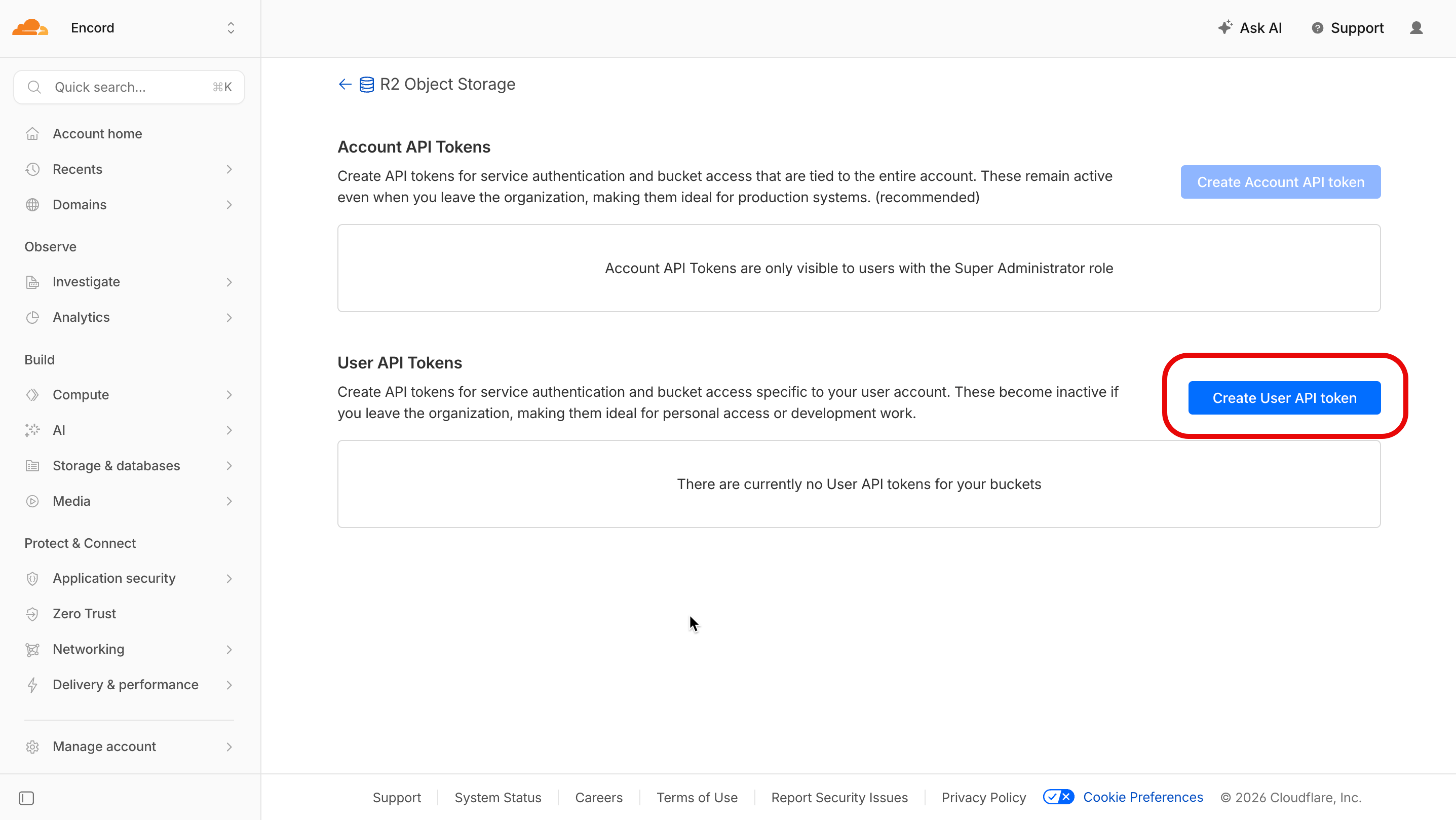
The API tokens page appears.
-
Click Create Account API token or Create User API token depending on your Cloudflare account privileges.
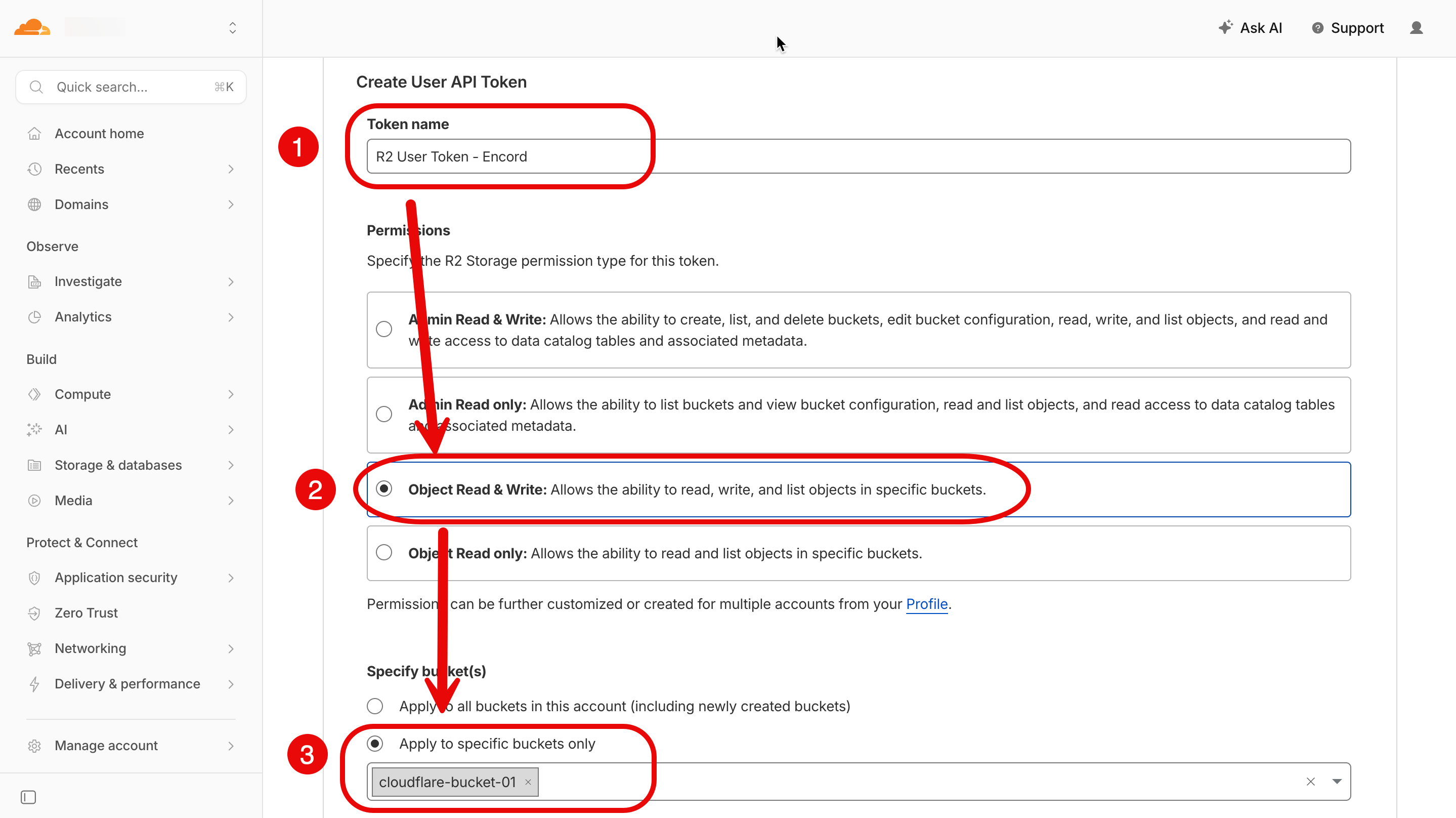
The Create User API Token page appears.
-
Specify permissions on one or more storage buckets:
-
Permissions:
- For functionality: Select Object Read & Write
- For limited functionality: Select Object Read only
-
Buckets
- For simplicity: Select Apply to all buckets in this account
- For Security: Select Apply to specific buckets only
-
Permissions:
- Click Create Account/User API token. The Summary page for the API token appears.
-
Record the
Access Key IDandSecret Access Key.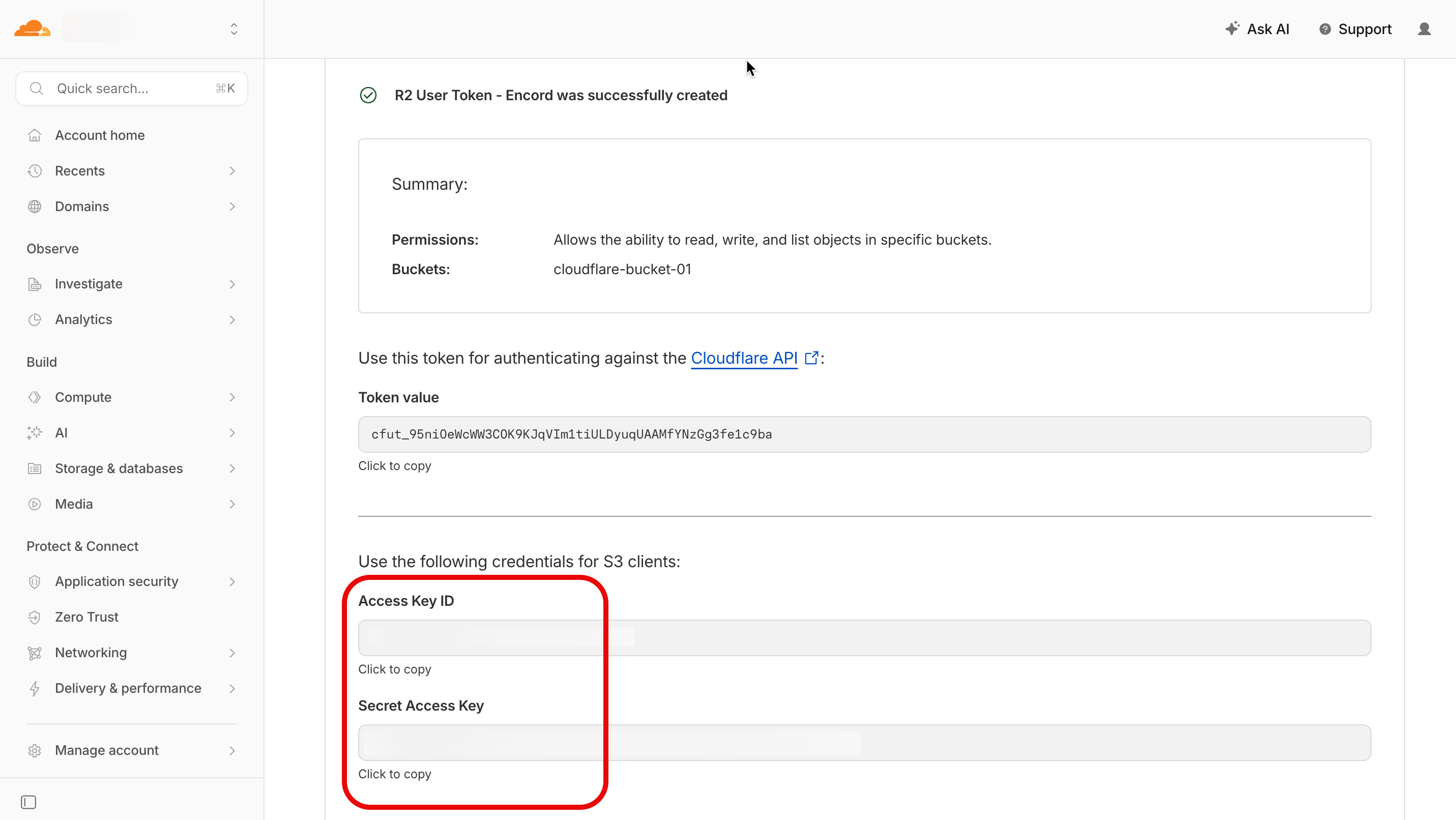
- Click Finish.
- Return to the R2 object storage Overview page.
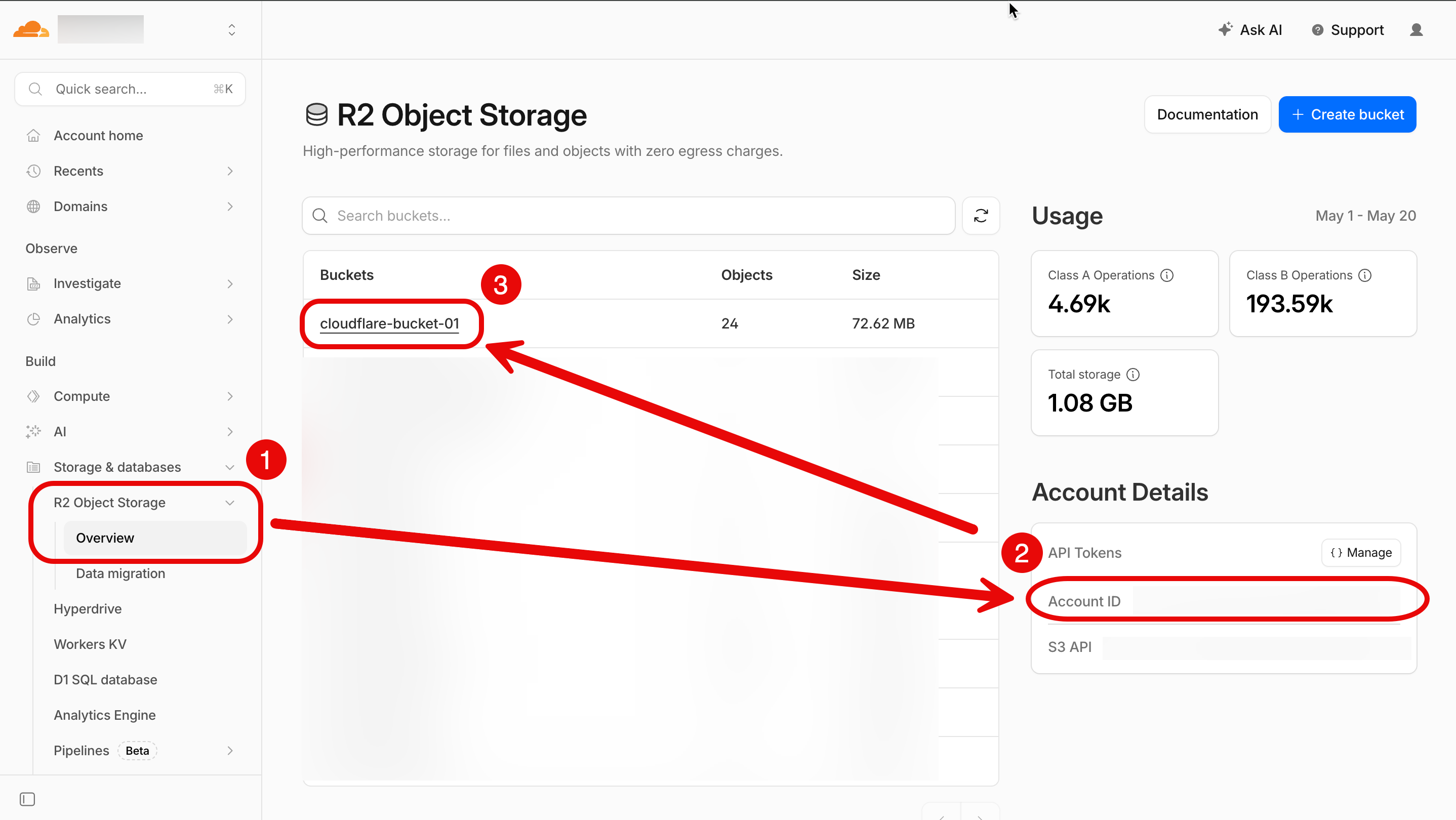
-
Record the
Account ID. -
(OPTIONAL: CORS Policy) Click the bucket the API token is applied to.
The Objects page for the bucket appears.
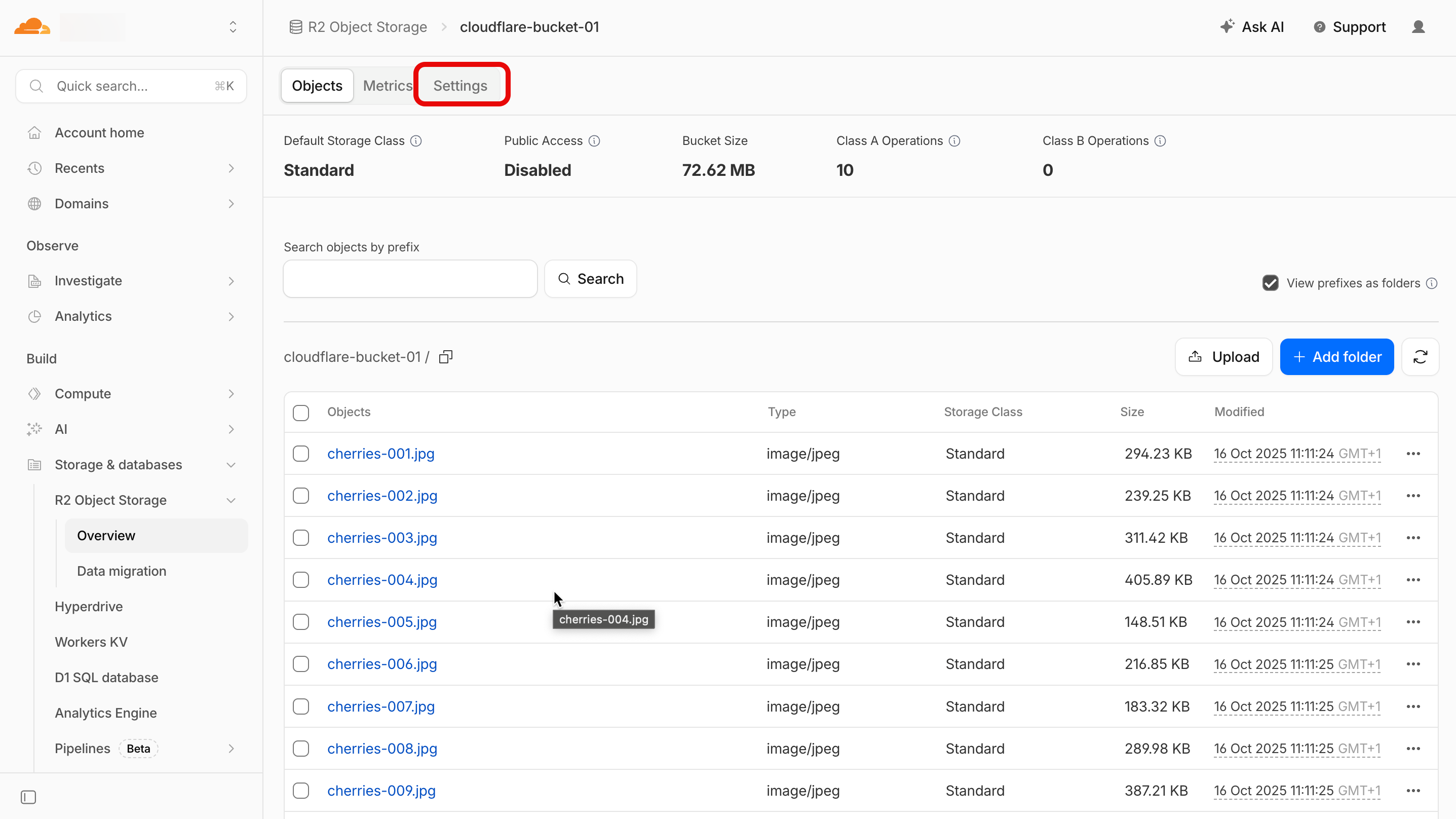
-
Click Settings.
The Settings page for the bucket appears.
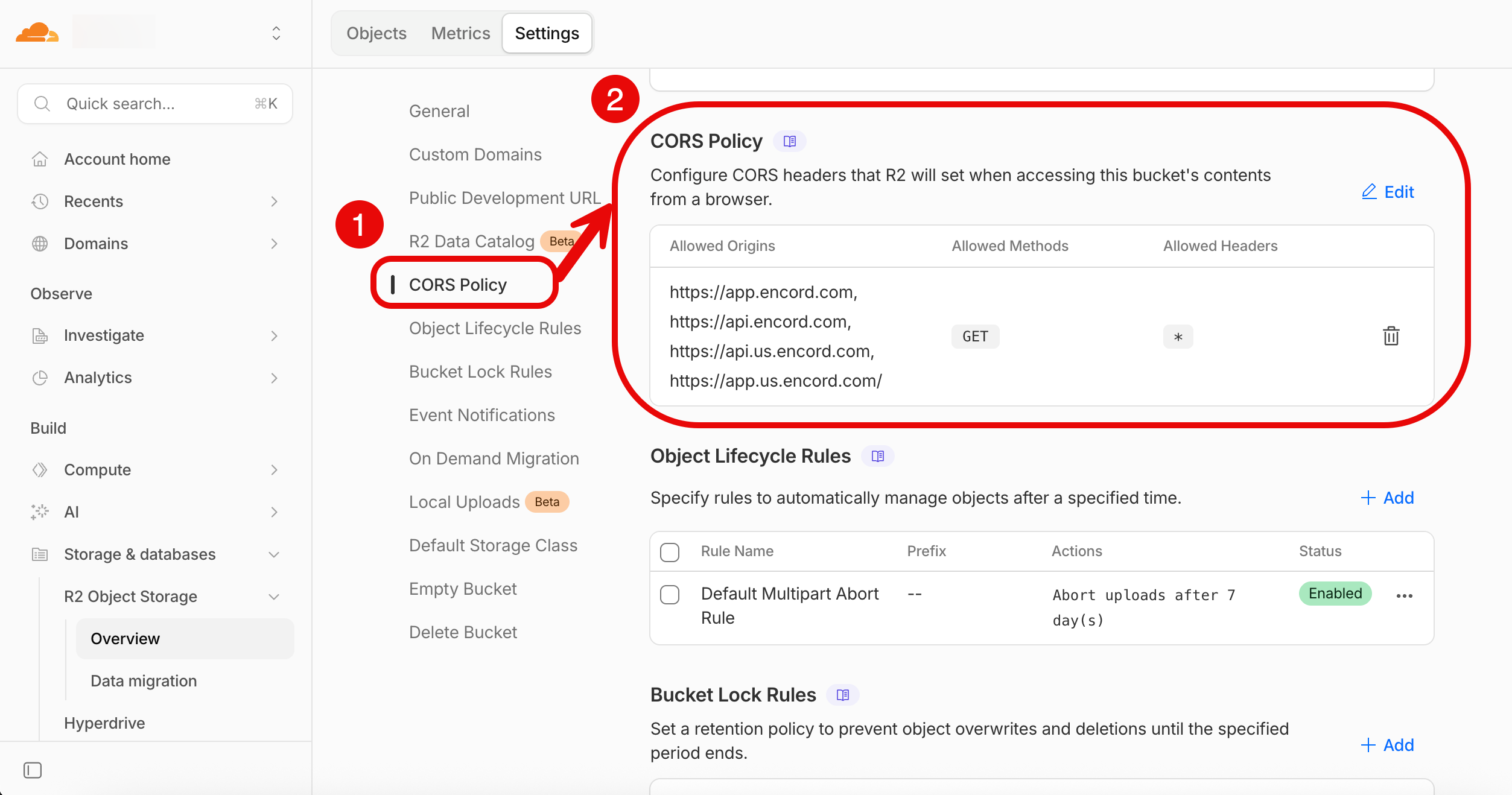
- Click CORS Policy. The Settings page moves to the CORS Policy section.
-
Click + Add.
The CORS Policy panel appears.
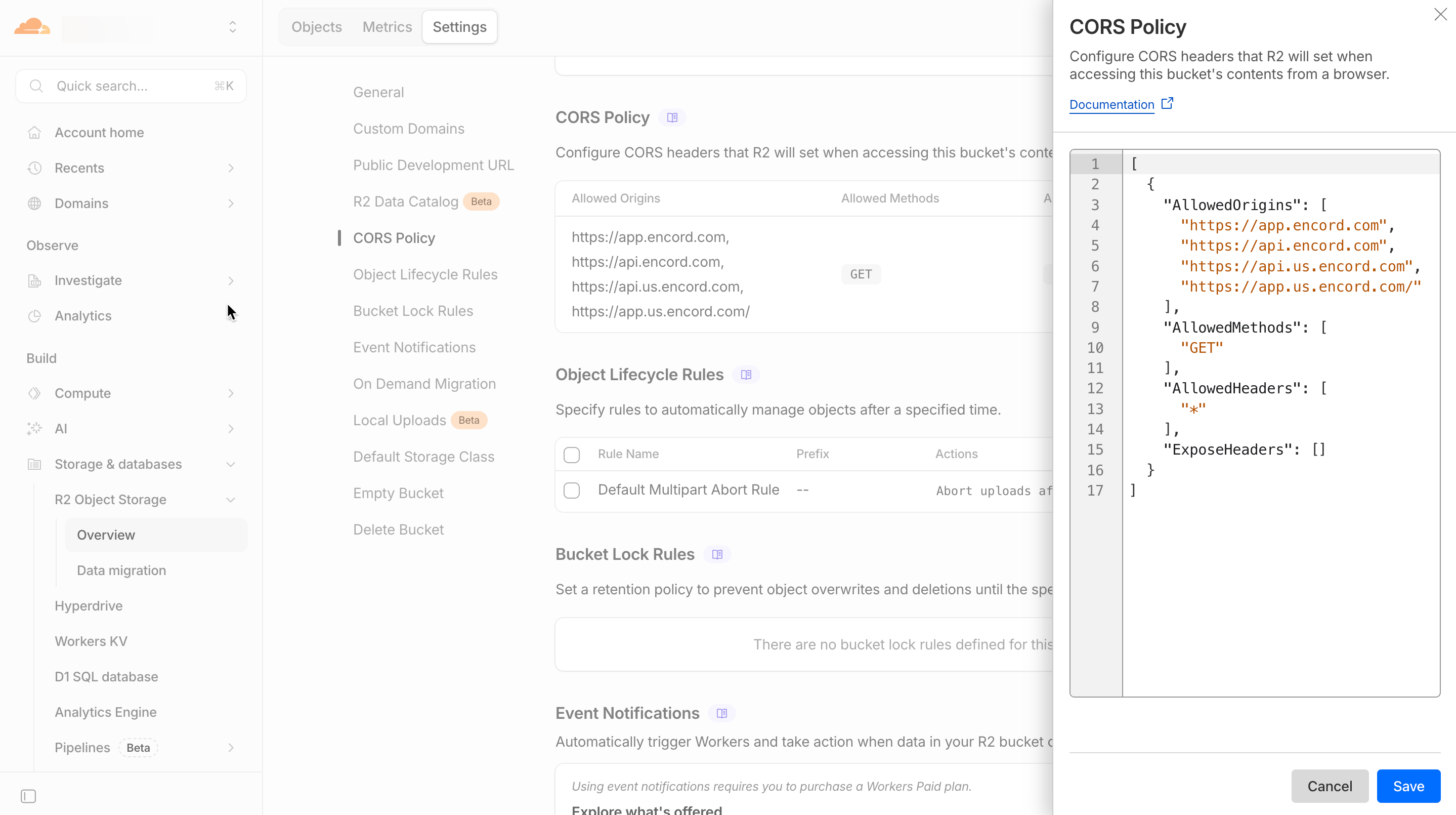
- Copy the following into the workspace:
These rules allow byte-range requests (
GET/HEAD) and expose the range and caching headers — Content-Range, Content-Length, Accept-Ranges, ETag, Content-Type, Last-Modified — that large scene files (such as MCAP) need in order to stream in chunks directly in the browser. Without them, Scenes stay stuck on “Loading content…” and report that the scene has no images.- Click Save.
2. Encord Configuration
- Navigate to Workspace Settings > Cloud Buckets and click +New integration to create a new integration. The integration dialog appears.
-
Select Cloudflare in the integration dialog.

-
Provide a meaningful name for the integration.

-
Paste the following, from Cloudflare, into step 3:
Account IDAccess Key IDSecret Access Key

-
Specify Advanced settings for tighter security if required.

-
Click Create.
The integration appears in the Integrations list.
