> ## Documentation Index
> Fetch the complete documentation index at: https://docs.encord.com/llms.txt
> Use this file to discover all available pages before exploring further.
# Automatic Annotation
Annotators have some choices when it comes to automatically labeling and tracking objects:
* SAM 3: Automatically detect and track one or more objects.
* SAM 2: Automatically detect objects and track one or more objects.
* Interpolation: Tracking objects between a range of frames.
* Agents: Automatically detect and track objects.
## SAM 3
This feature is currently in Early Access. Its user experience is still under development and may change as improvements are introduced. Contact support to gain access to SAM 3.
SAM 3 allows you to label and track one or more objects in a data unit. You can also use prompts to SAM 3 to help with labeling.
### Label one object
Labeling one object is the same for images and videos.
1. Go to **Annotate** > **Projects**.
2. Click a Project from the Project list.
3. OPTIONAL: Filter the data units as required from the *Queue*.
4. Click **Start task**, **Initiate**, or use the keyboard shortcut Command + Enter in the *Queue*.
The *Label Editor* appears.
5. Click the **Toggle auto-annotation** button for the object class from the *Classes* list.
Use the keyboard shortcut for the object class then use the keyboard shortcut SHIFT + A.
A dialog appears for SAM 3.
6. Select **Single object**, if it is not selected.
7. Click on an object in your image or video.
Use the following when needed:
* **Left click** to *INCLUDE* an area.
* **Right click** to *EXCLUDE* an area.
8. Click **Save**.
Use the keyboard shortcut ENTER or middle click to save.
9. Continue labeling as required.
10. Click **Submit** to submit the task.
### Track one object
You can track objects in videos or image sequences.
1. Go to **Annotate** > **Projects**.
2. Click a Project from the Project list.
3. OPTIONAL: Filter the data units as required from the *Queue*.
4. Click **Start task**, **Initiate**, or use the keyboard shortcut Command + Enter in the *Queue*. The *Label Editor* appears.
5. Click the **Toggle auto-annotation** button for the object class from the *Classes* list. A dialog appears for SAM 3.
Use the keyboard shortcut for the object class then use the keyboard shortcut SHIFT + A.
6. Select **Single object**, if it is not selected.
7. Click on an object in your image or video.
Use the following when needed:
* **Left click** to *INCLUDE* an area.
* **Right click** to *EXCLUDE* an area.
8. Specify the number of frames to track the object across.
You can specify a global setting for number of frames to track in **Editor Settings** > **Label Tracking** > **Number of frames to predict**.
9. Click **Track backwards** or **Track forwards**.
10. Click **Save**.
Use the keyboard shortcut ENTER or middle click to save.
11. Continue labeling as required.
12. Click **Submit** when you are done labeling the task.
This task assumes you are already in the Label Editor.
**Method 1**
1. Hover over a label in the Label Editor workspace.
2. Right click. A menu appears.
3. Click one of the following:
* **Track forwards** or use the keyboard shortcut SHIFT + T.
* **Track backwards** or use the keyboard shortcut SHIFT + OPTION/ALT + T.
4. Click **Save**.
Use the keyboard shortcut ENTER or middle click to save.
5. Continue labeling/tracking objects as required.
6. Click **Submit** to submit the task.
**Method 2**
1. Hover over a label in the *Labels* list. A small groups of icons appear.
2. Click the kebab icon. A menu appears.
3. Click one of the following:
* **Track forwards from this frame** or use the keyboard shortcut SHIFT + T.
* **Track backwards from this frame** or use the keyboard shortcut SHIFT + OPTION/ALT + T.
4. Click **Save**.
Use the keyboard shortcut ENTER or middle click to save.
5. Continue labeling/tracking objects as required.
6. Click **Submit** to submit the task.
### Label multiple objects
You can track objects in videos, image groups, or image sequences.
1. Go to **Annotate** > **Projects**.
2. Click a Project from the Project list.
3. OPTIONAL: Filter the data units as required from the *Queue*.
4. Click **Start task**, **Initiate**, or use the keyboard shortcut Command + Enter in the *Queue*. The *Label Editor* appears.
5. Click the **Detect all** button for the object class from the *Classes* list.
You can also use the keyboard shortcut for the class, then click SHIFT + A, and then click **Detect all** > **Detect all objects**.
You can specify a global setting for number of frames to track in **Editor Settings** > **Label Tracking** > **Number of frames to predict**.
6. Click **Save**.
Use the keyboard shortcut ENTER or middle click to save.
7. Continue labeling as required.
8. Click **Submit** when you are done labeling the task.
### Use SAM 3 prompt
1. Go to **Annotate** > **Projects**.
2. Click a Project from the Project list.
3. OPTIONAL: Filter the data units as required from the *Queue*.
4. Click **Start task**, **Initiate**, or use the keyboard shortcut Command + Enter in the *Queue*. The *Label Editor* appears.
5. Click the **Toggle auto-annotation** button for the object class from the *Classes* list. A dialog appears for SAM 3.
Use the keyboard shortcut for the object class then use the keyboard shortcut SHIFT + A.
6. Select **Detect all**.
7. Provide a prompt to start labeling.
8. Click on an object in your image or video.
Use the following when needed:
* **Left click** to *INCLUDE* an area.
* **Right click** to *EXCLUDE* an area.
9. Specify the number of frames to track the object across.
You can specify a global setting for number of frames to track in **Editor Settings** > **Label Tracking** > **Number of frames to predict**.
10. Click **Track backwards** or **Track forwards**.
11. Click **Save**.
Use the keyboard shortcut ENTER or middle click to save.
12. Continue labeling as required.
13. Click **Submit** when you are done labeling the task.
### Track multiple objects
You can track objects in videos or image sequences.
You can track multiple objects, of multiple classes, at the same time.
In this example, we'll label multiple objects at once by class and then track all of them.
1. Go to **Annotate** > **Projects**.
2. Click a Project from the Project list.
3. OPTIONAL: Filter the data units as required from the *Queue*.
4. Click **Start task**, **Initiate**, or use the keyboard shortcut Command + Enter in the *Queue*. The *Label Editor* appears.
5. Click the **Toggle auto-annotation** button for the object class from the *Classes* list. A dialog appears for SAM 3.
Use the keyboard shortcut for the object class then use the keyboard shortcut SHIFT + A.
6. Select **Detect all**.
7. Select the labels you want to track objects on by doing one of the following:
* Hold down SHIFT and select the labels to track from the Label Editor workspace or from the *Labels* list
* Left click and drag the area, in the Label Editor workspace, with the labels you want to track.
8. Right click. A menu appears.
9. Click one of the following:
* **Track forwards** or use the keyboard shortcut SHIFT + T.
* **Track backwards** or use the keyboard shortcut SHIFT + OPTION/ALT + T.
You can specify a global setting for number of frames to track in **Editor Settings** > **Label Tracking** > **Number of frames to predict**.
10. Click **Save**.
Use the keyboard shortcut ENTER or middle click to save.
11. Continue labeling and tracking as required.
12. Click **Submit** when you are done labeling the task.
This task assumes you are already in the Label Editor.
**Method 1**
1. Select the labels you want to track objects on:
* Hold down SHIFT and select the labels to track in the Label Editor workspace.
* Left click and drag the area, in the Label Editor workspace, with the labels you want to track.
2. Right click. A menu appears.
3. Click one of the following:
* **Track forwards** or use the keyboard shortcut SHIFT + T.
* **Track backwards** or use the keyboard shortcut SHIFT + OPTION/ALT + T.
4. Click **Save**.
Use the keyboard shortcut ENTER or middle click to save.
5. Continue labeling/tracking objects as required.
6. Click **Submit** to submit the task.
**Method 2**
1. Hold down SHIFT and select labels in the *Labels* list.
2. Move your cursor to the Label Editor workspace.
3. Right click. A menu appears.
4. Click one of the following:
* **Track forwards** or use the keyboard shortcut SHIFT + T.
* **Track backwards** or use the keyboard shortcut SHIFT + OPTION/ALT + T.
5. Click **Save**.
Use the keyboard shortcut ENTER or middle click to save.
6. Continue labeling/tracking objects as required.
7. Click **Submit** to submit the task.
## SAM 2
### Label one object
Labeling one object is the same for images and videos.
1. Go to **Annotate** > **Projects**.
2. Click a Project from the Project list.
3. OPTIONAL: Filter the data units as required from the *Queue*.
4. Click **Start task**, **Initiate**, or use the keyboard shortcut Command + Enter in the *Queue*.
The *Label Editor* appears.
5. Click the **Toggle auto-annotation** button for the object class from the *Classes* list.
Use the keyboard shortcut for the object class then use the keyboard shortcut SHIFT + A.
A dialog appears for SAM 2.
6. Click on an object in your image or video.
Use the following when needed:
* **Left click** to *INCLUDE* an area.
* **Right click** to *EXCLUDE* an area.
7. Click **Save**.
Use the keyboard shortcut ENTER or middle click to save.
8. Continue labeling as required.
9. Click **Submit** to submit the task.
### Track one object
You can track objects in videos or image sequences.
1. Go to **Annotate** > **Projects**.
2. Click a Project from the Project list.
3. OPTIONAL: Filter the data units as required from the *Queue*.
4. Click **Start task**, **Initiate**, or use the keyboard shortcut Command + Enter in the *Queue*. The *Label Editor* appears.
5. Click the **Toggle auto-annotation** button for the object class from the *Classes* list. A dialog appears.
Use the keyboard shortcut for the object class then use the keyboard shortcut SHIFT + A.
6. Click on an object in your image or video.
Use the following when needed:
* **Left click** to *INCLUDE* an area.
* **Right click** to *EXCLUDE* an area.
7. Specify the number of frames to track the object across.
You can specify a global setting for number of frames to track in **Editor Settings** > **Label Tracking** > **Number of frames to predict**.
8. Click **Track backwards** or **Track forwards**.
9. Click **Save**.
Use the keyboard shortcut ENTER or middle click to save.
10. Continue labeling as required.
11. Click **Submit** when you are done labeling the task.
This task assumes you are already in the Label Editor.
**Method 1**
1. Hover over a label in the Label Editor workspace.
2. Right click. A menu appears.
3. Click one of the following:
* **Track forwards** or use the keyboard shortcut SHIFT + T.
* **Track backwards** or use the keyboard shortcut SHIFT + OPTION/ALT + T.
4. Click **Save**.
Use the keyboard shortcut ENTER or middle click to save.
5. Continue labeling/tracking objects as required.
6. Click **Submit** to submit the task.
**Method 2**
1. Hover over a label in the *Labels* list. A small groups of icons appear.
2. Click the kebab icon. A menu appears.
3. Click one of the following:
* **Track forwards from this frame** or use the keyboard shortcut SHIFT + T.
* **Track backwards from this frame** or use the keyboard shortcut SHIFT + OPTION/ALT + T.
4. Click **Save**.
Use the keyboard shortcut ENTER or middle click to save.
5. Continue labeling/tracking objects as required.
6. Click **Submit** to submit the task.
### Track multiple objects
You can track objects in videos or image sequences.
You can track multiple objects, of multiple classes, at the same time.
In this example, we'll label multiple objects, and then track all of them.
1. Go to **Annotate** > **Projects**.
2. Click a Project from the Project list.
3. OPTIONAL: Filter the data units as required from the *Queue*.
4. Click **Start task**, **Initiate**, or use the keyboard shortcut Command + Enter in the *Queue*. The *Label Editor* appears.
5. Click the **Toggle auto-annotation** button for the object class from the *Classes* list. A dialog appears.
Use the keyboard shortcut for the object class then use the keyboard shortcut SHIFT + A.
6. Create and edit some object labels.
7. Select the labels you want to track objects on by doing one of the following:
* Hold down SHIFT and select the labels to track from the Label Editor workspace or from the *Labels* list
* Left click and drag the area, in the Label Editor workspace, with the labels you want to track.
8. Right click. A menu appears.
9. Click one of the following:
* **Track forwards** or use the keyboard shortcut SHIFT + T.
* **Track backwards** or use the keyboard shortcut SHIFT + OPTION/ALT + T.
You can specify a global setting for number of frames to track in **Editor Settings** > **Label Tracking** > **Number of frames to predict**.
10. Click **Save**.
Use the keyboard shortcut ENTER or middle click to save.
11. Continue labeling and tracking as required.
12. Click **Submit** when you are done labeling the task.
This task assumes you are already in the Label Editor.
**Method 1**
1. Select the labels you want to track objects on:
* Hold down SHIFT and select the labels to track in the Label Editor workspace.
* Left click and drag the area, in the Label Editor workspace, with the labels you want to track.
2. Right click. A menu appears.
3. Click one of the following:
* **Track forwards** or use the keyboard shortcut SHIFT + T.
* **Track backwards** or use the keyboard shortcut SHIFT + OPTION/ALT + T.
4. Click **Save**.
Use the keyboard shortcut ENTER or middle click to save.
5. Continue labeling/tracking objects as required.
6. Click **Submit** to submit the task.
**Method 2**
1. Hold down SHIFT and select labels in the *Labels* list.
2. Move your cursor to the Label Editor workspace.
3. Right click. A menu appears.
4. Click one of the following:
* **Track forwards** or use the keyboard shortcut SHIFT + T.
* **Track backwards** or use the keyboard shortcut SHIFT + OPTION/ALT + T.
5. Click **Save**.
Use the keyboard shortcut ENTER or middle click to save.
6. Continue labeling/tracking objects as required.
7. Click **Submit** to submit the task.
## Interpolation
Use interpolation to automatically create labels by estimating the location that labels should be created, between a start frame and an end frame.
1. Go to **Annotate** > **Projects**.
2. Click a Project from the Project list.
3. OPTIONAL: Filter the data units as required from the *Queue*.
4. Click **Start task**, **Initiate**, or use the keyboard shortcut Command + Enter in the *Queue*. The *Label Editor* appears.
5. Create a label, for an object, on a *start* frame.
6. Move forward in the data unit to the location of the *end* frame.
7. Click **Instantiate object in frame** for the object from the *Labels* list.
8. Do one of the following to interpolate/track between the start and end frames:
* Right click the label and click **Interpolate** from the menu.
* Click the kebab icon for the label in the *Labels* list and click **Interpolate**.
* Use the shortcut SHIFT + I.
9 . Edit the created labels as needed.
10. Continue creating and editing labels.
11. Click **Submit**.
### Re-Interpolate
Interpolation results can be improved by manually correcting some interpolated labels, and re-running the interpolation.
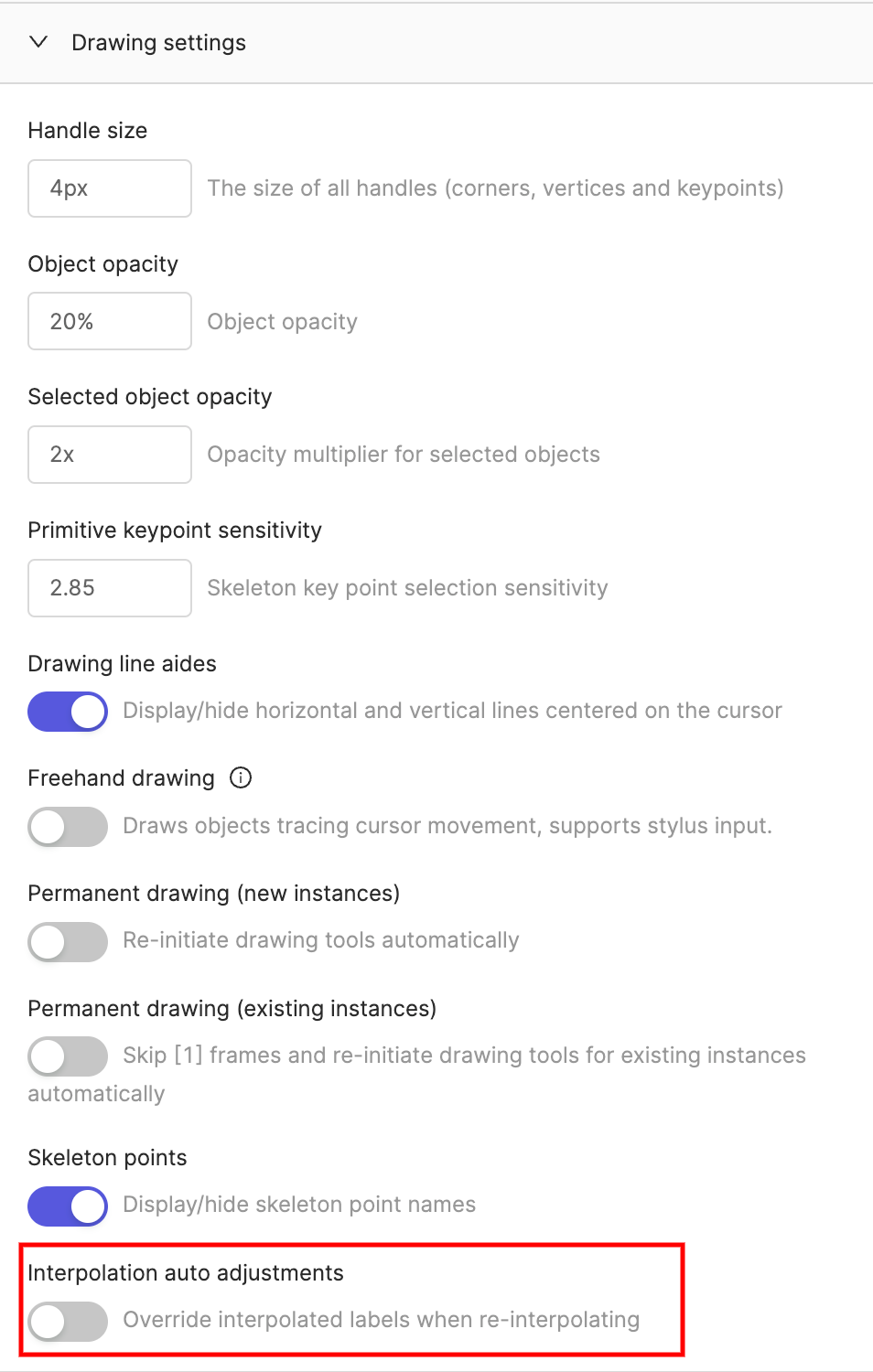
Enable the *Interpolation auto adjustments* toggle in the *Drawing settings* section of the label editor settings. This ensures that only labels with a [confidence score (α)](/platform-documentation/Annotate/annotate-label-editor#confidence-score) less than 100% are overwritten in successive interpolations, while manual labels (α = 100%) are kept and serve as key frames.
***
This process can be repeated any number of times.
All labels created using interpolation are always assigned α = 99%.
## Agents
Your Workspace/Project Admin communicates that they configured an Editor Agent to perform annotation on tasks in the *Queue*. You trigger the Editor Agent from inside the Label Editor.
1. Go to **Annotate** > **Projects**.
2. Click a Project from the Project list.
3. OPTIONAL: Filter the data units as required from the *Queue*.
4. Click **Start task**, **Initiate**, or use the keyboard shortcut Command + Enter in the *Queue*. The *Label Editor* appears.
5. Move the cursor to the Label Editor workspace.
6. Right click. A menu appears.
7. Hover over **Trigger agent**. A menu appears.
8. Click the Agent you want to trigger.
9. Edit the labels as required.
10. Click **Submit**.